
Home / Guides / Nutrition in Recovery
Nutrition in Recovery: What to Eat to Support Healing

Substance use often leaves the body short on key nutrients. Alcohol interferes with how the body absorbs and stores vitamins like thiamine (B1), folate and B12, and many people who use drugs skip meals, eat irregularly or lose weight. In early recovery, eating regular, balanced meals can steady blood sugar, which may reduce irritability and make cravings easier to manage, support sleep and mood, and help the liver, gut and brain heal. There is no special recovery diet. The basics work: three meals and a snack or two a day, protein at each meal, plenty of vegetables, fruit and whole grains, enough water, and less sugar and caffeine. People who drank heavily should talk to a doctor about thiamine and other supplements, since severe deficiency can cause lasting brain damage.
Quick answers
What should I eat in early recovery?
Regular meals built around protein (eggs, beans, fish, chicken, yogurt), vegetables and fruit, whole grains, and healthy fats. Aim to eat every three to four hours and drink plenty of water.
Why do I crave sugar after quitting alcohol?
Alcohol is a source of sugar and calories, and both alcohol and sugar affect the brain's reward system. Sugar cravings are very common early on. Regular meals with protein and fiber help, and a little sweetness is fine while you focus on staying sober.
Do I need vitamins in recovery?
Many people do, especially after heavy drinking. Doctors often prescribe thiamine and may suggest a multivitamin or folate. Ask a doctor before taking supplements, since needs depend on your health.
Can food reduce cravings?
Food is not a cure, but going too long without eating can feel like a craving and lower your guard. Steady meals help many people feel calmer and more in control. Hunger is the H in the HALT check.
Why nutrition matters in recovery
Substance use affects nutrition in two ways: the substance itself can damage organs and block nutrient absorption, and the lifestyle around it often replaces meals with skipped meals or fast food (MedlinePlus). Rebuilding regular eating helps your body repair and gives you more stable energy and mood.
What good nutrition can support
- Steadier energy and fewer mood swings through the day.
- Better sleep, which often struggles for months after quitting.
- Healing of the liver, gut lining and brain.
- A stronger immune system.
- Fewer moments where hunger and low blood sugar feel like cravings.
How different substances affect nutrition
| Substance | Common nutrition effects | Focus in recovery |
|---|---|---|
| Alcohol | Low thiamine, folate, B6, B12, zinc and magnesium; liver and pancreas damage; empty calories | Doctor-guided supplements, protein, leafy greens, whole grains |
| Opioids | Constipation, irregular meals, low appetite during use and nausea in withdrawal | Fiber, fluids, small frequent meals |
| Stimulants | Suppressed appetite, weight loss, dehydration, dental problems | Regular meals, rebuilding weight, hydration |
| Cannabis | Increased appetite and snacking during use, low appetite in withdrawal | Structured meals, balanced snacks |
| Nicotine | Appetite suppression; weight gain after quitting is common | Healthy snacks, movement, patience with weight |
The basics of eating for recovery
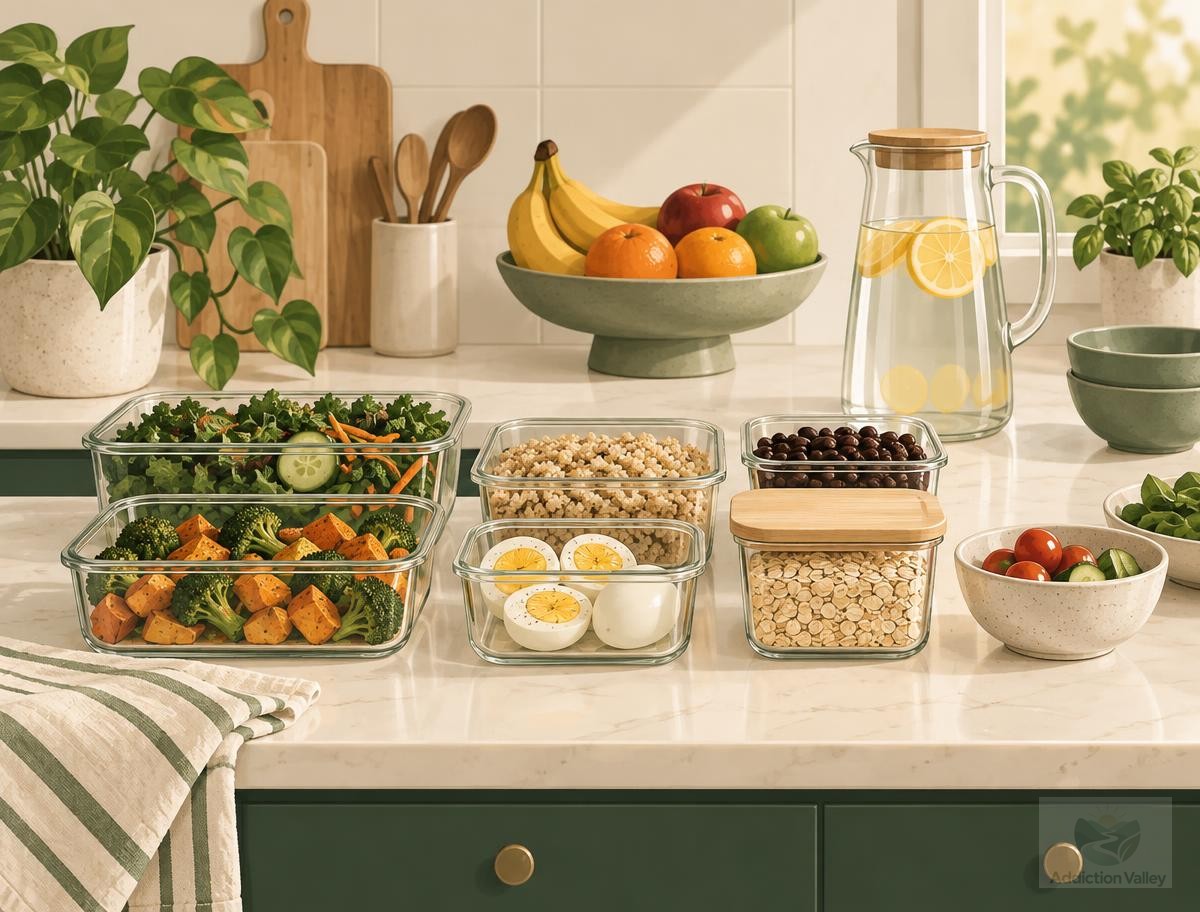
- Eat breakfast, even something small like yogurt and fruit or eggs and toast.
- Eat every three to four hours to keep blood sugar steady.
- Include protein at each meal: eggs, fish, chicken, beans, lentils, tofu, dairy or nuts.
- Fill half your plate with vegetables and fruit when you can.
- Choose whole grains like oats, brown rice and whole-wheat bread for steady energy.
- Add healthy fats such as olive oil, nuts, seeds and fish.
- Drink water through the day, especially if you sweat or feel shaky.
- Limit caffeine after midday so it does not disrupt sleep.
Food fits into a broader daily rhythm. Our guide to building an early recovery routine shows how to plan meals, sleep and support into each day.
Sugar, caffeine and cravings
Many people trade alcohol or drugs for sweets and coffee in early recovery. That is understandable and, for a while, far safer than returning to substance use. Over time, big swings in sugar and caffeine can worsen energy crashes, anxiety and sleep.
- Pair sweets with protein or fiber, like fruit with peanut butter.
- Keep easy snacks nearby: nuts, cheese, hummus, yogurt, boiled eggs.
- Cut back on energy drinks, which pack large amounts of caffeine and sugar.
- Try herbal tea or sparkling water in the evening.
- Be patient. Taste and cravings often settle over weeks to months.
If cravings for substances feel strong, see our guides on relapse triggers and medication for alcohol cravings.
Gut health, sleep and mood
Alcohol and many drugs disrupt the gut and its bacteria. Fiber-rich foods like beans, oats, vegetables and fruit, along with yogurt or other fermented foods, support digestion. Opioid recovery often brings constipation or diarrhea, so fluids and gradual increases in fiber help.
Regular meals also support sleep and mood. A light snack with protein and complex carbohydrates in the evening, like whole-grain toast with nut butter, can help some people sleep. If low mood persists, read alcohol and depression and talk with a doctor.
Practical tips on a budget
- Stock simple staples: oats, rice, canned beans, eggs, frozen vegetables, peanut butter, bananas.
- Batch-cook once or twice a week so healthy food is ready when you are tired.
- Use frozen and canned produce. It is as nutritious as fresh and lasts longer.
- Apply for SNAP benefits and visit local food banks if money is tight.
- Ask your treatment program or sober living home about meal support.
- Eat with others when you can. Shared meals build connection and routine.
Disordered eating sometimes appears alongside addiction. If you are restricting, bingeing or purging, our page on food addiction and a talk with your doctor can help. For free treatment referrals, call the SAMHSA National Helpline at 1-800-662-4357. If you are in crisis, call or text 988.
Frequently asked questions
Is there a special diet for addiction recovery?
No. Balanced, regular meals with protein, vegetables, fruit, whole grains and healthy fats are the foundation. A doctor or dietitian can tailor advice to your health.
Why am I gaining weight in recovery?
Appetite often returns after stopping stimulants, nicotine or alcohol, and some people swap substances for sweets. Some weight gain is common and usually less risky than continued use. Focus on regular meals and movement.
How long does it take to restore nutrients?
It varies. Some deficiencies improve within weeks of good eating and supplements, while liver and gut healing can take months. Blood tests from your doctor can track progress.
Should I see a dietitian?
It can help, especially if you have liver disease, diabetes, significant weight change or disordered eating. Many treatment programs include nutrition support.
What is thiamine and why does it matter?
Thiamine is vitamin B1. Heavy drinking blocks its absorption, and deficiency can damage the brain. Doctors often give thiamine during alcohol detox.
Is coffee okay in recovery?
In moderation, yes. Keep it to the morning and avoid large amounts, which can worsen anxiety and sleep problems common in early recovery.
Talk to someone this week
One conversation with a doctor or a helpline counselor shortens this more than any amount of planning alone. It is free, and it is confidential.
Call 1-800-662-4357Sources
- MedlinePlus, Diet and substance use recovery
- NIAAA, Alcohol's damaging effects on the brain
- NIH Office of Dietary Supplements, Thiamin fact sheet
- USDA, Supplemental Nutrition Assistance Program (SNAP)
- SAMHSA National Helpline
This page is for information only and does not replace advice from a qualified clinician who knows your history. In the United States, call or text 988 for the Suicide and Crisis Lifeline.