Home / Addiction / Types of Addiction
Types of Addiction: Substances, Behavioral Addictions and Treatment
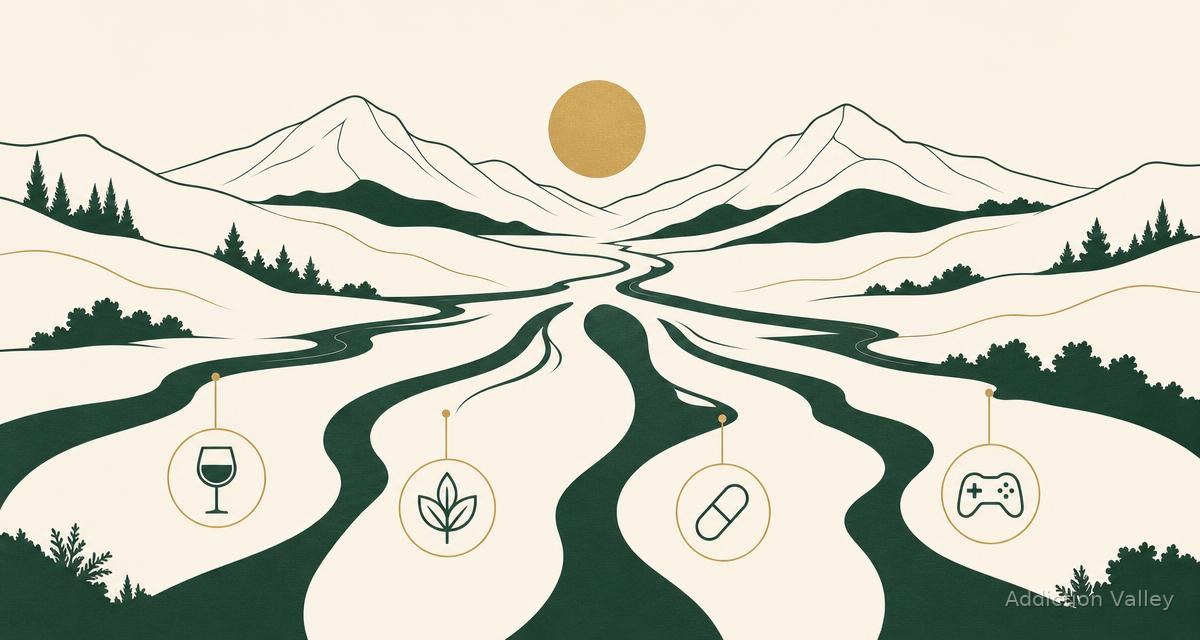
Addiction comes in two broad families: substance use disorders, covering ten classes of drugs, and behavioral addictions, led by gambling disorder. They differ in chemistry but share the same engine, a reward system recalibrated around one source until everything else goes quiet. This page maps each type, how common it is, what makes it distinctive, and how treatment differs between them.
Quick answers
What are the main types of addiction?
Two families: substance use disorders (alcohol, opioids, stimulants, cannabis, nicotine, sedatives and others) and behavioral addictions, of which gambling disorder is the one formally recognized in the DSM-5, with gaming disorder recognized by the WHO.
Which addiction is most common?
Nicotine dependence is the most widespread. Among substance use disorders diagnosed in the US, alcohol is the most common, followed by cannabis and opioids.
Are behavioral addictions real addictions?
Gambling disorder is a recognized diagnosis with the same criteria structure as substance disorders, and brain imaging shows the same reward-system changes. Other compulsive behaviors are treated with the same framework even where formal diagnostic codes are still catching up.
Can someone have more than one addiction?
Yes, and it is common. Alcohol plus nicotine is the classic pairing; polysubstance use and substance-plus-gambling combinations are frequent. Treatment works best when co-occurring conditions are addressed together.
The two families of addiction
Every addiction runs on the same machinery: a reward signal that dwarfs natural rewards, a stress system that grows louder between hits, and self-control circuits that lose votes. What differs is the trigger. Substance addictions are driven by a drug's chemistry. Behavioral addictions are driven by a pattern of anticipation, risk and reward that needs no chemical at all.
- Substance use disorders: diagnosed for ten classes of drugs, from alcohol to inhalants.
- Gambling disorder: the one behavioral addiction with full DSM-5 recognition and the same criteria structure.
- Gaming disorder: recognized by the World Health Organization, under study in the US.
- Other compulsive behaviors: problematic pornography, shopping and social media use are treated clinically with addiction frameworks, though formal codes are still developing.
The substance use disorders, one by one
| Type | What it involves | What makes it distinctive |
|---|---|---|
| Alcohol | The most common substance use disorder in the US | Dangerous withdrawal; three approved medications; socially invisible at the mild end |
| Opioids | Prescription painkillers, heroin and fentanyl | Highest overdose risk; three effective medications; fentanyl has changed the risk profile entirely |
| Stimulants | Cocaine, methamphetamine, misused ADHD medication | No approved medication yet; behavioral therapy, especially contingency management, leads |
| Cannabis | About 3 in 10 users develop a disorder | Rising potency; withdrawal is real but mild; driven by daily habit loops |
| Nicotine and vaping | The most widespread dependence | Legal and woven into routine; excellent treatment evidence; salt nicotine raised intake sharply |
| Sedatives | Benzodiazepines and sleep medications | Often begins with a prescription; dangerous withdrawal requiring medical taper |
| Others | Hallucinogens, inhalants, club drugs | Less common but covered by the same diagnostic framework |
Each substance has its own page in this library with signs, withdrawal timelines, treatment options and costs: alcohol, opioids and painkillers, stimulants, cannabis, prescription medicines and nicotine and vaping.
Behavioral addictions: gambling, gaming and beyond
Gambling disorder is the template. It uses the same 11-criteria structure as substance disorders, produces the same escalation, secrecy and chasing of losses, and responds to the same therapies. The expansion of legal sports betting across the US since 2018 has made it the fastest-growing behavioral addiction, particularly among men under 35. The National Council on Problem Gambling operates a 24-hour helpline at 1-800-522-4700.
Signs that a behavior has crossed the line
- Needing to raise the stakes, the time or the intensity to get the same feeling.
- Restlessness and irritability when trying to cut down.
- Repeated failed attempts to stop.
- Chasing losses, returning to win back what was lost.
- Lying about time or money spent.
- Risking relationships, jobs or money that matters.
- Relying on others to cover the financial damage.
Problematic pornography, shopping and social media use sit in a gray zone: not yet formal diagnoses in the US, but treated successfully with the same cognitive and behavioral approaches. The question that matters is the same as for any substance: is it costing you things you care about, and can you stop when you decide to?
When addictions overlap
Addictions cluster. Alcohol and nicotine reinforce each other at the level of brain chemistry. Stimulant use and gambling travel together. Cannabis frequently accompanies both. And across every combination sits the strongest pairing of all: addiction and a mental health condition such as anxiety, depression, PTSD or ADHD.
- Treating one addiction while ignoring another usually fails, because the untreated one becomes the coping strategy.
- Integrated treatment, one team addressing substance use and mental health together, produces the best outcomes.
- Medication choices need the full picture; some interact across substances.
If anxiety or low mood is part of the picture, read the link between addiction and anxiety. It explains why self-treatment with any substance reverses over time, and what works instead.
How treatment differs by type
| Type | Medication | Therapy that leads |
|---|---|---|
| Alcohol | Naltrexone, acamprosate, disulfiram | Cognitive behavioral therapy, motivational enhancement |
| Opioids | Buprenorphine, methadone, naltrexone | Therapy plus medication; medication alone outperforms therapy alone |
| Stimulants | None approved yet | Contingency management has the strongest evidence |
| Cannabis | None approved | CBT and motivational enhancement therapy |
| Nicotine | Varenicline, patches and gum, bupropion | Behavioral support roughly doubles quit rates with medication |
| Gambling | No specific drug; treat co-occurring conditions | CBT and motivational interviewing; peer groups widely available |
Levels of care work the same way across all types, from a primary care conversation at the mild end to residential treatment at the severe end. Our guide to treatment options and when each one fits walks through how clinicians match intensity to need.
How to get help today
- For any substance, call the SAMHSA National Helpline at 1-800-662-4357, free, confidential, 24 hours a day.
- For gambling, call or text the National Problem Gambling Helpline at 1-800-522-4700.
- Search FindTreatment.gov by zip code, level of care and payment type.
- Tell a doctor the full picture: every substance, every behavior, and any mental health symptoms. Treatment planning depends on it.
- In an emergency, call 911. In a mental health crisis, call or text 988.
How type and severity shape the first treatment step
The name of the addiction is only one part of treatment planning. Clinicians also assess withdrawal risk, overdose history, medical and mental health conditions, housing, pregnancy, previous treatment and whether the person can stay safe between appointments. Two people using the same substance may need very different starting points.
| Clinical need | Possible starting point |
|---|---|
| Mild symptoms with stable housing | Primary care, medication when available and weekly counseling |
| Frequent use with repeated failed attempts | Intensive outpatient treatment and closer medication follow-up |
| Dangerous withdrawal risk | Medically supervised withdrawal before ongoing treatment |
| Unsafe home or severe co-occurring illness | Residential or hospital-level care followed by step-down support |
Prevention and early intervention across addiction types
- Delay first substance use during adolescence, when the developing brain is most vulnerable.
- Store prescription opioids, stimulants and sedatives securely and dispose of unused medicine.
- Screen for risky alcohol, nicotine, drug and gambling patterns in routine health care.
- Treat anxiety, depression, trauma, pain and ADHD with evidence-based care rather than leaving symptoms unmanaged.
- Respond to early loss of control before work, health or relationships collapse.
Early warning signs are often easier to see than a specific addiction type. Our guide to the signs of addiction explains the clinical criteria and the smaller changes families tend to notice first.
Frequently asked questions
What is the most addictive substance?
By the proportion of users who become dependent, nicotine and heroin sit near the top in research rankings, and fentanyl has raised opioid risk sharply. But addictiveness at the population level is only part of the story: alcohol causes the largest total harm in the US because of how widely it is used.
Is weed addictive?
Yes. About 3 in 10 people who use cannabis develop a cannabis use disorder, and the risk rises with daily use, high-potency products and starting young. Withdrawal is real, typically irritability, poor sleep and low appetite for one to two weeks, though milder than alcohol or opioid withdrawal.
Is gambling addiction treated like drug addiction?
Largely, yes. It is diagnosed with the same criteria structure, treated with the same therapies, and often treated in the same clinics. The National Problem Gambling Helpline at 1-800-522-4700 is the gambling equivalent of the SAMHSA line.
Can you be addicted to something that is not a drug?
Yes. Gambling disorder is the formally recognized example, and gaming disorder is recognized by the World Health Organization. Compulsive pornography, shopping and social media use are treated with addiction frameworks even though formal US diagnostic codes are still developing.
What is polysubstance use disorder?
It describes dependence on several substances at once rather than one dominant drug. It is common, and modern diagnosis simply records each substance use disorder separately. Treatment addresses them together, because stopping one while continuing another usually unravels.
Which addictions have medications available?
Alcohol (naltrexone, acamprosate, disulfiram), opioids (buprenorphine, methadone, naltrexone) and nicotine (varenicline, replacement products, bupropion) all have approved, evidence-backed medications. Stimulant, cannabis and gambling disorders currently rely on behavioral therapies, which for stimulants means contingency management first.
Talk to someone this week
A doctor or trained helpline counselor can help you choose a safe next step. Support is free and confidential.
Call 1-800-662-4357Sources
- NIDA, The Science of Drug Use and Addiction
- SAMHSA National Helpline, 1-800-662-HELP
- National Council on Problem Gambling
- World Health Organization, Gaming Disorder
- FindTreatment.gov, federal treatment locator
This page is for information only and does not replace advice from a qualified clinician who knows your history. In the United States, call or text 988 for the Suicide and Crisis Lifeline.