
Home / Behavioral Addictions / Food Addiction
Food Addiction: Signs, Science and How to Get Help

Food addiction is not a formal diagnosis, but the pattern it describes is real and measurable: loss of control over eating specific foods, strong cravings, repeated failed attempts to cut back, and continued eating despite physical and emotional harm. Research points to ultra-processed foods combining sugar, fat and salt as the main driver, since whole foods rarely produce the same pattern. Much of what people call food addiction meets criteria for binge eating disorder, which is diagnosable and treatable. Effective help combines therapy, regular eating patterns and, in some cases, medication.
Quick answers
Is food addiction real?
The behavior pattern is real, though it is not an official diagnosis. Researchers describe addictive-like eating, mostly involving ultra-processed foods, and much of it overlaps with binge eating disorder.
What are the signs of food addiction?
Eating past fullness regularly, intense cravings for specific foods, secret eating, guilt afterward, repeated failed attempts to cut back, and eating to manage emotions rather than hunger.
How is it different from binge eating disorder?
Binge eating disorder is a formal diagnosis defined by recurrent large binges with loss of control and marked distress. Food addiction focuses instead on specific foods and craving. Many people fit both descriptions.
Where do I get help?
Start with a doctor or a registered dietitian who works with eating disorders. In the US, the ANAD helpline offers free peer support, and SAMHSA can point to local mental health services.
What the science actually says
The debate is not whether people lose control around certain foods. They clearly do. The debate is whether that is best described as addiction to a substance, to a behavior, or as an eating disorder with a different name.
- Ultra-processed foods deliver sugar, fat and salt in combinations that do not occur in nature, and they are absorbed rapidly.
- Imaging studies show reward-system responses that resemble, though do not match, those seen with drugs.
- Almost nobody reports these symptoms about plain whole foods, which suggests processing matters more than eating itself.
- Restriction itself drives bingeing, so dieting history is often part of the cause rather than the cure.
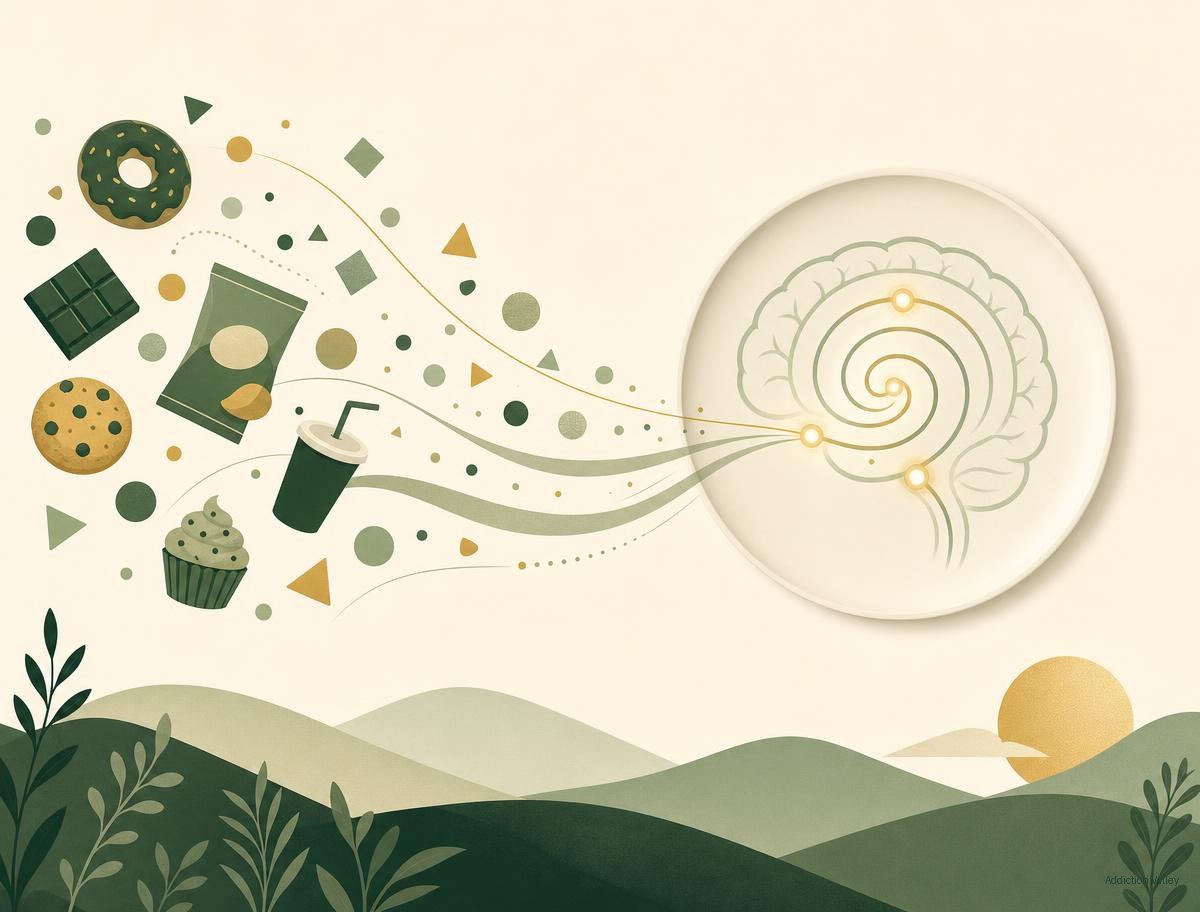
Signs of compulsive eating
- Eating far more than intended once you start with certain foods.
- Cravings that arrive without physical hunger and do not pass when ignored.
- Eating in secret, or hiding wrappers and packaging.
- Continuing despite weight, blood sugar, reflux or joint problems.
- Repeated rules and diets that end in the same cycle.
- Guilt, shame or numbness after eating.
- Planning the day around food, or around when nobody will be watching.
Why it happens
| Driver | How it works |
|---|---|
| Food design | Ultra-processed products are engineered for maximum palatability and easy overconsumption |
| Restriction | Long periods of dieting or skipped meals produce rebound eating that feels like loss of control |
| Emotional regulation | Eating reliably reduces distress in the short term, which trains the habit |
| Sleep and stress | Short sleep and high cortisol both increase appetite for calorie-dense food |
| Trauma and shame | Common in people with severe patterns, and often what treatment ends up addressing |
What treatment looks like
Treatment does not mean a stricter diet. In most cases, more structure and less restriction is what breaks the cycle.
- Cognitive behavioral therapy for eating disorders, the strongest-evidence treatment for binge eating.
- Regular eating: three meals and planned snacks, so the body stops driving rebound eating.
- Working with a registered dietitian rather than following an elimination plan alone.
- Treating depression, anxiety and ADHD, which frequently sit alongside binge eating.
- Medication where appropriate, discussed with a physician, including options approved for binge eating disorder.
- Peer support such as Overeaters Anonymous or ANAD groups, if the group model suits you.
The recovery skills overlap heavily with substance recovery: identifying triggers, planning for high-risk moments and treating a lapse as information. Our treatment options guide covers that framework.
Practical first steps this week
- Eat breakfast, even small, if mornings are currently empty. Skipped meals set up evening bingeing.
- Stop keeping the two or three trigger foods in the house, without banning entire categories.
- Track situations rather than calories, noting time, mood and what preceded the episode.
- Protect sleep, since short sleep raises appetite the following day.
- Tell one person, and book an appointment with a doctor or dietitian.
Getting the right diagnosis matters
Food addiction is a research concept, not a formal diagnosis. A qualified clinician should screen for binge eating disorder, bulimia nervosa, night eating, depression, ADHD, trauma and medical conditions that affect appetite. The distinction changes treatment, and it protects people from advice that could make restriction and bingeing worse.
| Pattern | What distinguishes it |
|---|---|
| Binge eating disorder | Repeated objectively large binges with loss of control and distress, without regular compensatory behavior |
| Bulimia nervosa | Binges followed by vomiting, laxatives, fasting or excessive exercise |
| Emotional eating | Eating in response to feelings, without necessarily losing control or eating a large amount |
| Addictive-like eating | Craving and loss of control focused mainly on highly processed foods |
Recovery without another cycle of restriction
Early treatment aims for predictable nourishment before weight change. Regular meals reduce biological urgency, while therapy works on triggers, shame and all-or-nothing rules. A dietitian with eating-disorder experience can help reintroduce feared foods gradually and distinguish a genuine trigger from a rule created by dieting.
- Use a consistent meal and snack rhythm rather than compensating after an episode.
- Record context, hunger, emotion and loss of control instead of calorie totals.
- Avoid labeling foods as clean, bad or earned, which strengthens the restriction cycle.
- Measure progress by fewer episodes, less secrecy and faster recovery after a lapse.
- Include medical monitoring when diabetes, blood pressure or another health condition is present.
Frequently asked questions
Is sugar addictive?
Animal studies show addiction-like responses to intermittent sugar access, and human evidence is mixed. What is consistent is that sugar combined with fat in ultra-processed foods drives the strongest cravings.
Should I quit certain foods completely?
Some people do better with abstinence from a small number of trigger foods. Broad restriction usually backfires by increasing rebound eating, so this is worth planning with a dietitian.
Does food addiction cause obesity?
Compulsive eating contributes to weight gain for many people, but obesity has many causes and plenty of people with binge eating are not in a larger body. Treat the eating pattern, not the number.
Do weight loss medications help?
Some people report reduced food noise on GLP-1 medications, and research is ongoing. They are prescribed for weight and metabolic health, not as an approved treatment for binge eating, so discuss it with a physician.
Where can I find free support in the US?
The ANAD helpline offers free peer support for eating concerns, and the SAMHSA National Helpline at 1-800-662-4357 can connect you with local mental health treatment.
Can dieting make compulsive eating worse?
Yes. Skipped meals, rigid food rules and repeated calorie restriction can increase biological hunger and all-or-nothing thinking, which raises binge risk. Treatment usually restores a regular eating pattern before pursuing other goals.
Talk to someone this week
A doctor or trained helpline counselor can help you choose a safe next step. Support is free and confidential.
Call 1-800-662-4357Sources
- National Institute of Mental Health, eating disorders
- NIH, National Library of Medicine, ultra-processed food addiction research
- ANAD, free eating disorder helpline and support groups
- SAMHSA National Helpline
This page is for information only and does not replace advice from a qualified clinician who knows your history. In the United States, call or text 988 for the Suicide and Crisis Lifeline.