
Alcohol and Depression: How They Feed Each Other

Alcohol and depression travel together so often that it can be hard to tell which one arrived first. Roughly a third of people with major depression also have problems with alcohol, and people with alcohol use disorder are several times more likely to experience depression than everyone else.
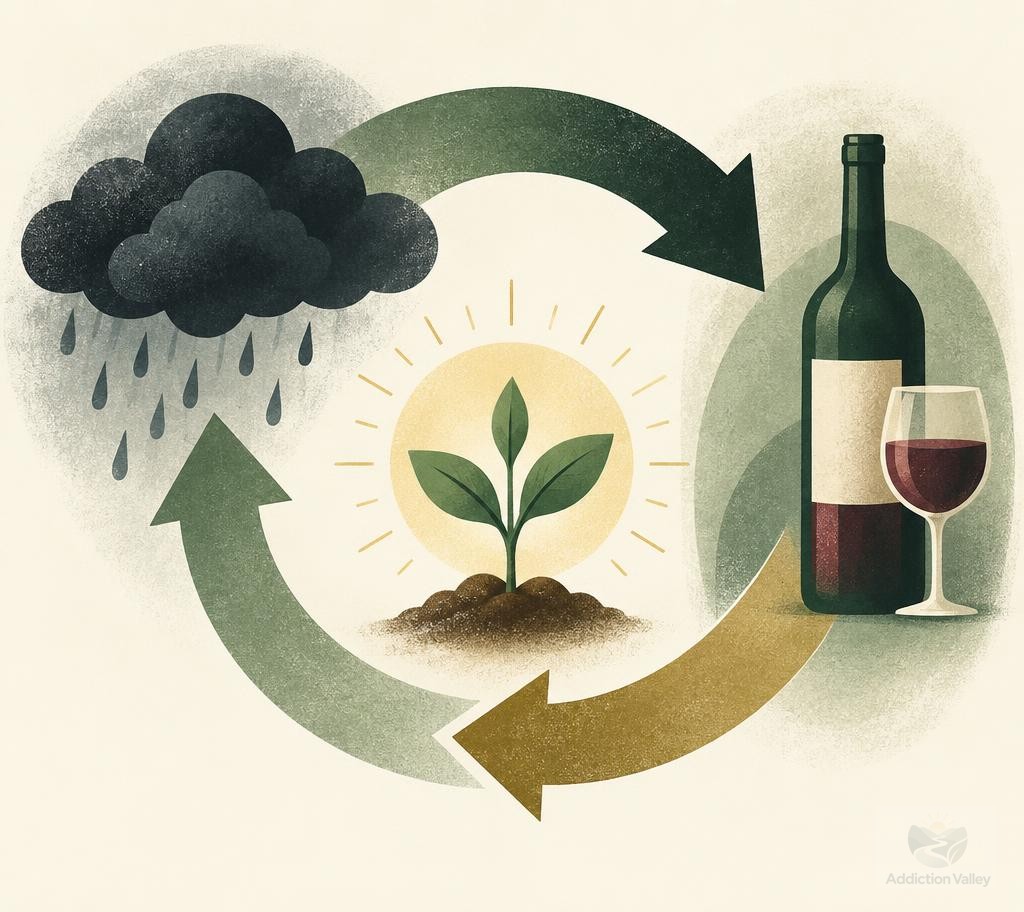
The relationship runs in both directions. Depression makes drinking more tempting because alcohol offers fast, reliable relief. Drinking makes depression more likely because alcohol disrupts the brain systems that regulate mood, sleep and stress. Each problem quietly maintains the other.
This article explains how that loop works, why drinking to cope backfires, how to tell whether low mood might lift when you stop drinking, and what treatment looks like when both are in the picture. Recovery from both at the same time is common and well studied.
The link, in plain terms
Alcohol is a depressant, meaning it slows activity in the brain. In the short term that feels like relaxation, because it dampens anxiety and self-criticism along with everything else. The brain responds to being artificially slowed by pushing back, and for hours to days after drinking it runs more anxious and more flat than it did before.
With occasional drinking, that rebound passes. With regular heavy drinking, the rebound becomes the baseline. Research summarized by the National Institute on Alcohol Abuse and Alcoholism on alcohol and co-occurring mental health conditions shows that heavy, sustained drinking can produce depression that is clinically indistinguishable from major depression, and that it often lifts substantially within weeks of stopping.
Which came first, and why it matters less than you think
Clinicians used to spend a lot of energy sorting people into two groups: those whose depression caused the drinking, and those whose drinking caused the depression. The distinction matters somewhat, because depression that began before the drinking is more likely to persist after stopping. But for treatment purposes, the answer is usually the same.
- If depression came first: alcohol was likely serving as self-medication, and stopping removes the anesthetic. Treatment needs to address the depression directly, or relapse risk stays high.
- If drinking came first: stopping alcohol is often the single most effective depression treatment available, and mood frequently improves within two to four weeks.
- If neither is clearly first: treat both at the same time, which is the modern standard either way.
The practical takeaway is that you do not need to solve the chicken-and-egg question before acting. Cutting down or stopping is the highest-yield experiment available, and the response over four to eight weeks tells you and your clinician a great deal.
Why drinking to cope backfires
Sleep
Alcohol helps people fall asleep faster and then wrecks the second half of the night. It suppresses REM sleep, increases waking, and worsens breathing-related sleep problems. Since poor sleep is one of the strongest drivers and predictors of depression, regular drinking reliably deepens low mood through this route alone.
Brain chemistry
Alcohol interferes with serotonin and dopamine signaling and stresses the systems that regulate the body's response to pressure. The brain adapts to regular drinking by turning its own reward and calm systems down, leaving a flatter, more anxious default state between drinks.
Life consequences
Depression feeds on withdrawal, conflict and self-criticism. Drinking reliably generates all three: plans get cancelled, arguments happen, money disappears, and the morning-after self-assessment is rarely kind. Each consequence gives depression more raw material to work with.
Medication interference
Alcohol can blunt the effect of antidepressants and, with some of them, increase sedation or other side effects. People who drink regularly while on medication often conclude the medication does not work when the drinking has been cancelling it out.
The self-medication trap
Nobody sets out to build the loop. It starts because alcohol genuinely works, briefly, for the symptoms it eventually worsens. A drink after a hard day is the fastest-acting anxiety medication most people have access to, and relief that fast teaches the brain a powerful lesson.
The trap is that tolerance and rebound steadily raise the dose and lower the benefit. What once took one glass takes three. The relief window shrinks from an evening to an hour. Meanwhile the cost, in sleep, mood and functioning, keeps compounding. By the time the trade is obviously bad, stopping has become difficult in its own right.
Will my depression lift if I stop drinking?
Often, yes, at least partly. Studies of people entering alcohol treatment repeatedly find that depressive symptoms drop sharply within the first two to four weeks of abstinence, even without any depression-specific treatment. For a substantial share of people, what looked like major depression turns out to have been largely alcohol-induced.
For others, a genuine underlying depression remains once the alcohol fog clears. This is not a reason to keep drinking. It is the point at which depression treatment can finally work properly, because it is no longer competing with a nightly depressant.
A realistic timeline
- Weeks one to two: sleep and anxiety often worsen before improving, and mood can dip as the brain recalibrates.
- Weeks two to four: energy and sleep typically begin improving, and the flat, heavy mornings start to lift.
- One to three months: the clearest read on what remains. Depression still present at this point deserves direct treatment.
If heavy daily drinking has been going on for a long time, stopping suddenly can be dangerous. Our alcohol withdrawal timeline explains who needs medical supervision, and a clinician can arrange a safe detox if one is needed.
What treating both looks like
The evidence is clear that treating alcohol use and depression together beats treating them one at a time. The SAMHSA guidance on co-occurring conditions recommends integrated care, meaning one team or coordinated providers address both rather than sending you between services.
The main components
- Stopping or sharply reducing alcohol, with medical support if withdrawal risk is present.
- Talking therapy, most often CBT or behavioral activation, which treat both depression and the thinking patterns that drive drinking.
- Medication where indicated: antidepressants work in people with alcohol use disorder, and naltrexone or acamprosate can reduce drinking cravings at the same time.
- Peer support, whether 12-step, SMART Recovery or another group, which reduces the isolation that both conditions feed on.
- Sleep, movement and routine, unglamorous but consistently among the strongest mood interventions available.
Our page on dual diagnosis explains how co-occurring conditions are assessed and treated in more detail. If you do not have a provider, findtreatment.gov lists licensed programs and lets you filter for those that treat co-occurring mental health conditions.
When low mood becomes an emergency
Alcohol and depression together raise the risk of suicidal thinking well above either one alone, and alcohol lowers the inhibitions that usually keep dark thoughts from becoming actions. Take these signs seriously, in yourself or someone else.
- Thoughts of suicide or self-harm, or a sense that others would be better off without you.
- Drinking alone most days, especially in the morning, to manage feelings.
- Giving away possessions, saying goodbye, or a sudden calm after a period of visible despair.
- Drinking through a period of hopelessness rather than despite it.
Frequently asked questions
Can alcohol cause depression?
Yes. Sustained heavy drinking can produce a depressive episode that meets the criteria for major depression, through its effects on brain chemistry, sleep and life circumstances. This alcohol-induced depression often lifts substantially within two to four weeks of stopping, though stopping suddenly after heavy daily drinking can be dangerous and should be planned with a clinician.
Is it OK to drink while taking antidepressants?
Alcohol can reduce the effectiveness of antidepressants and increase side effects such as sedation, and it works against the recovery the medication is trying to support. Most prescribers recommend avoiding or strictly limiting alcohol while on them. Ask your prescriber about your specific medication rather than adjusting on your own.
I drink to manage my depression. What else works as fast?
Nothing legal works quite as fast, which is exactly why the habit is so sticky. The alternatives trade speed for staying power: behavioral activation, exercise, therapy and (where appropriate) medication improve mood reliably over days to weeks without the rebound. A clinician can also treat the acute distress directly while those take hold.
How long after quitting alcohol does depression improve?
Sleep and anxiety often get worse for the first week or two, then improve. Most people notice meaningfully better mood and energy within two to four weeks, with continued improvement over one to three months. Depression that persists past that point is likely a separate condition that responds well to direct treatment.
Do I need to treat the depression or the drinking first?
Neither. The evidence supports treating both at the same time, and treating only one tends to leave the other pulling you back. Look for providers or programs that offer integrated care for co-occurring conditions.
Does moderate drinking worsen depression too?
Heavier drinking carries the strongest risk, but even moderate regular drinking affects sleep architecture and next-day mood. If you are dealing with depression, a trial period of not drinking for four to eight weeks is a low-cost way to find out how much alcohol was contributing.
Break the loop with support
Treating alcohol and depression together works, and you do not have to untangle which came first before starting. Find providers who treat both, plus free and confidential helplines.
Find help near youSources
- NIAAA, Alcohol and co-occurring mental health conditions
- SAMHSA, Find help for substance use and mental health
- NIMH, Depression
- FindTreatment.gov, federal treatment locator
This article is for information only and does not replace advice from a qualified clinician who knows your history. In the United States, call or text 988 for the Suicide and Crisis Lifeline.