
The Link Between Addiction and Anxiety
Anxiety and addiction turn up together so often that treating one without the other rarely holds. The reason is simple. A drink, a pill or a hit works on anxiety immediately, and almost nothing else in life does.
Then the second half of the deal arrives. The nervous system adapts, the calm gets shorter, and the rebound anxiety between doses is worse than the anxiety you started with. People end up using to feel normal rather than to feel good, and the original problem is now buried under a second one.
This guide explains how the loop works in the brain, which condition usually comes first, why withdrawal can look exactly like an anxiety disorder, and what treatment looks like when both are addressed at the same time. It also covers what helps on a hard evening, when treatment is still weeks away.
How the loop actually works
Anxiety is the nervous system running its threat response when there is nothing to run from. Alcohol, benzodiazepines and opioids all quiet that response quickly, which teaches the brain a fast and powerful lesson about relief. The National Institute on Drug Abuse explains why substance use disorders and other mental illnesses so often occur together, including shared brain circuits and shared risk factors.
The brain then compensates. It dials down its own calming chemistry because something external is doing the work. When the substance leaves the system, that compensation is exposed, and the result is a nervous system running hot. That is the rebound, and it is why the anxiety on day two is often sharper than the anxiety that started the whole thing.
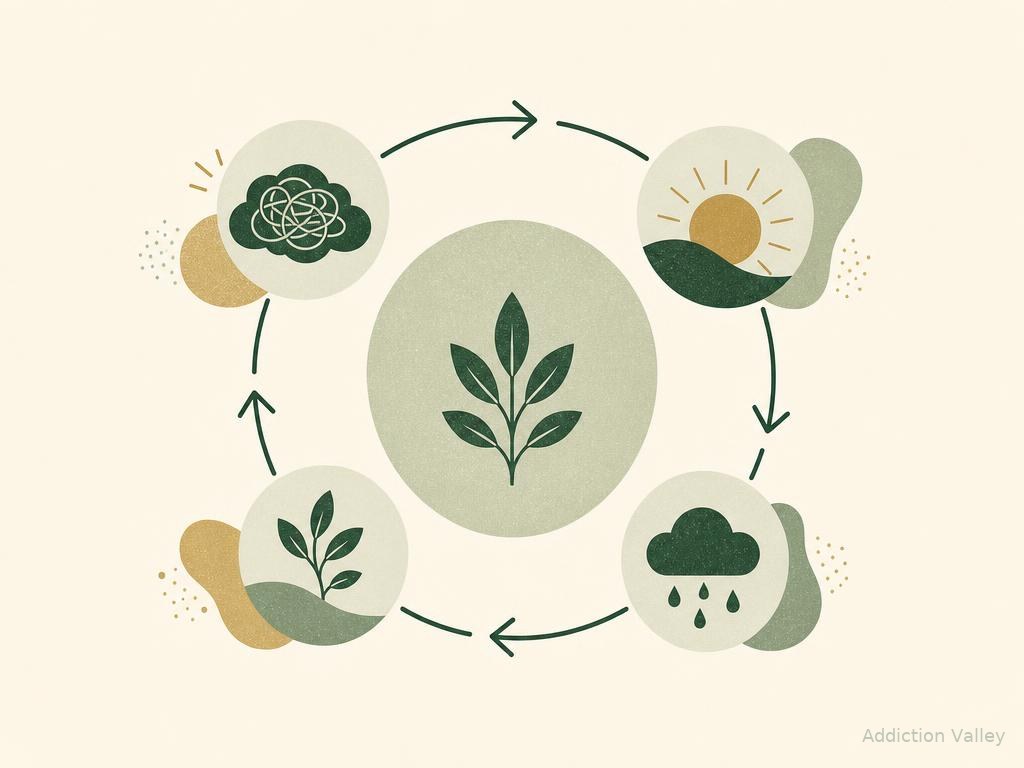
The cycle in four steps
- Anxiety rises to an uncomfortable level.
- A substance lowers it quickly, which reinforces the behaviour.
- The brain adapts and the calming effect shortens.
- Rebound anxiety arrives between doses and drives the next one.
Which comes first, anxiety or addiction
Both directions are common, and the honest answer is that it often does not matter for treatment.
- Anxiety first: someone with panic attacks or social anxiety finds that alcohol makes evenings tolerable, and use grows from there.
- Substance first: heavy use over months or years changes stress regulation, and anxiety appears where there was none before.
- Shared roots: trauma, chronic stress, genetics and sleep problems raise the risk of both independently.
Clinicians often cannot separate the two until someone has been substance free for several weeks, because withdrawal mimics anxiety so closely. That is not a reason to delay help. It is a reason to be assessed by someone who understands both conditions.
Why withdrawal looks exactly like anxiety
Racing heart, tight chest, sweating, restlessness, dread, broken sleep. Those describe a panic attack and they equally describe alcohol or benzodiazepine withdrawal. People frequently conclude that their anxiety disorder has become severe when what they are experiencing is a nervous system rebalancing.
That confusion has consequences. It can send someone back to using for relief, and it can lead to a rushed diagnosis. Our guide to how long post-acute withdrawal lasts explains the longer version of this pattern, where mood and sleep symptoms continue for months after detox ends.
Treating both at the same time
Treating one condition and ignoring the other is the most common way people end up cycling through help without progress. Integrated treatment addresses the substance use and the anxiety together, with one team that talks to itself. The SAMHSA guidance on co-occurring disorders describes what integrated care should include.
What usually works
- Cognitive behavioural therapy, which targets both anxiety patterns and use patterns with the same tools.
- Exposure-based therapy for panic and social anxiety, once use is stable.
- Medication for alcohol or opioid use disorder, such as naltrexone or buprenorphine, which lowers craving pressure.
- Non-addictive anxiety medication, typically an SSRI or SNRI, prescribed with the substance history in full view.
- Sleep treatment, because untreated insomnia keeps both conditions running.
A note on benzodiazepines
Benzodiazepines relieve anxiety fast and are a poor long-term fit for anyone with a substance use history, because tolerance and dependence develop quickly. Plenty of people are prescribed them anyway. If that is your situation, do not stop on your own. Ask your prescriber about a slow, planned taper with something else in place first.
What helps between appointments
Treatment takes weeks to arrange and months to work. These are the things that lower the baseline in the meantime, and they are unglamorous on purpose.
- A fixed wake time, even after a bad night. Sleep timing steadies mood faster than sleep length.
- Twenty minutes of daylight in the morning, outdoors, before screens.
- Slow breathing with a longer exhale than inhale, for two minutes, at the first sign of a spike.
- Caffeine capped early in the day, since it reproduces anxiety symptoms almost exactly.
- Movement most days, at a level you would describe as easy rather than punishing.
- One person you can text at the worst hour, agreed in advance.
None of these treat an anxiety disorder. They reduce how often the nervous system tips over, which buys time for real treatment to start working.
How to ask for help without explaining everything
Many people delay because they dread the conversation. It is shorter than you think. A doctor needs three pieces of information: what you use, how much and how often, and what the anxiety does to your day.
- Write those three things down before the appointment so you do not have to improvise.
- Say clearly that you want both the anxiety and the substance use looked at together.
- Ask what the plan is for the first four weeks, not just the first visit.
- Ask specifically whether medication is appropriate alongside therapy.
You can search licensed services through FindTreatment.gov, and read more explainers across our guides. If someone you love is in this loop, our piece on supporting a loved one without enabling is a better place to start than a confrontation.
Frequently asked questions
Does anxiety cause addiction?
Anxiety does not cause addiction on its own, but it raises the risk considerably. Substances that reduce anxiety quickly are strongly reinforcing, so someone using alcohol or sedatives for relief can move from occasional use to dependence faster than someone without an anxiety disorder.
Will my anxiety go away if I stop using?
It often improves a great deal, but rarely immediately. Anxiety usually spikes during withdrawal and the following weeks before settling. If it is still significant after two or three months substance free, it is likely an anxiety disorder that needs treatment in its own right.
Can I take anxiety medication in recovery?
Yes. SSRIs, SNRIs and several other non-addictive options are widely used in recovery. Benzodiazepines are the main concern because of dependence risk. Tell every prescriber about your substance history so they can choose safely.
What is integrated treatment?
It means one team treating the substance use and the mental health condition together, with a shared plan, rather than two separate services working in isolation. It produces better outcomes than treating either condition alone.
Break the loop with support
Anxiety and substance use respond best when they are treated together. Find licensed services near you and ask for an assessment that covers both.
Find your starting pointSources
- NIDA, Comorbidity: Substance Use Disorders and Other Mental Illnesses
- SAMHSA, Co-Occurring Disorders and Other Health Conditions
- NIMH, Anxiety Disorders
- 988 Suicide and Crisis Lifeline
- FindTreatment.gov, federal treatment locator
This article is for information only and does not replace advice from a qualified clinician who knows your history. In the United States, call or text 988 for the Suicide and Crisis Lifeline.