
Signs You Might Be Drinking Too Much
Nobody wakes up and decides to become a heavy drinker. It happens by drift. A glass after work becomes two, the weekend starts on Thursday, and the amount that used to feel like plenty stops touching the sides.
The tricky part is that heavy drinking rarely looks like the version of it you see on television. It looks like a person holding down a job, paying the mortgage, showing up to everything, and quietly feeling worse every month. That is why the honest questions matter more than the dramatic ones.
This guide walks through what counts as too much by US standards, the signs that show up before anything visibly falls apart, what alcohol is doing to sleep and mood in the background, and how to test your own drinking with a short experiment instead of a guess. Autumn is a useful time to run that test, because the calendar between now and New Year gets steadily harder.
What counts as too much in the first place
US guidance is more specific than most people expect. The National Institute on Alcohol Abuse and Alcoholism defines binge and heavy drinking by counted standard drinks rather than by how drunk you feel. Binge drinking is roughly four drinks for women or five for men within about two hours. Heavy drinking is four or more on any day, or eight or more per week for women, and five or more on any day or fifteen or more per week for men.
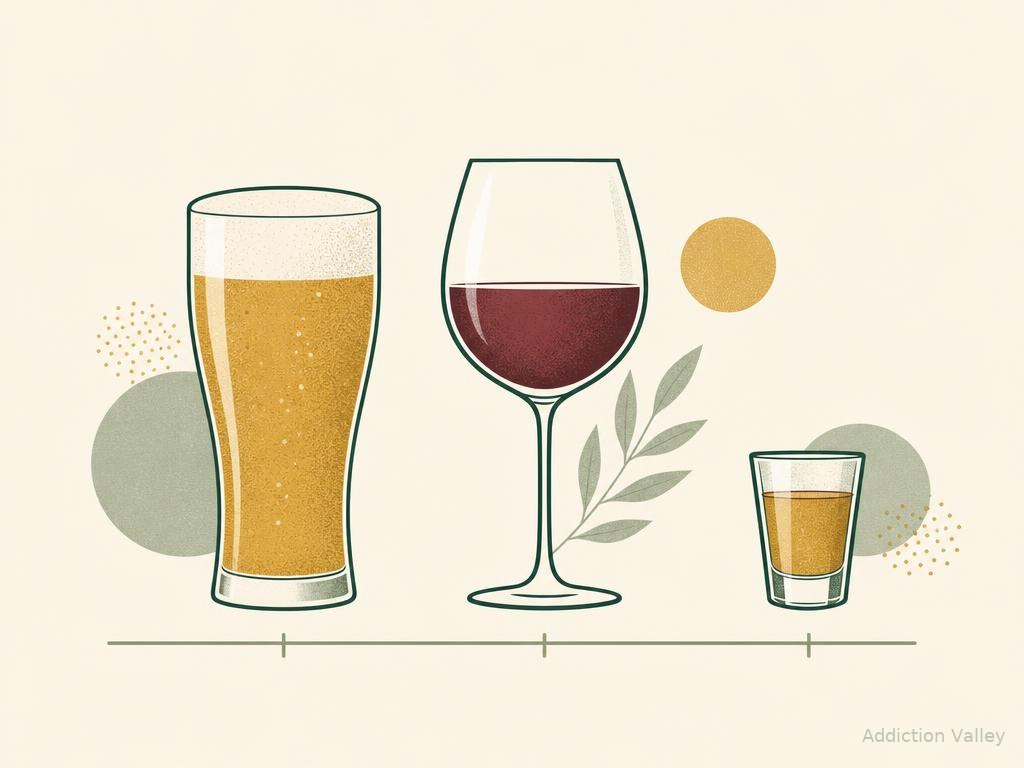
A standard drink in the US is 14 grams of pure alcohol: a 12 ounce regular beer, a 5 ounce glass of wine, or a 1.5 ounce shot of spirits. Home pours are almost never standard. A generous glass of wine can easily be two drinks, which means a person counting three glasses may actually be drinking six.
Count it properly for one week
- Write down every drink on the day you have it, not at the end of the week.
- Convert home pours honestly by checking the glass against a measure once.
- Include the drinks you would normally skip in the count, like the one while cooking.
- Total the week and compare it to the numbers above.
Most people are surprised. That surprise is information, not a verdict.
The quiet signs that show up first
Long before anything breaks, drinking starts to shape small decisions. These are the signals people tend to notice in hindsight.
- You think about the first drink of the day earlier than you used to.
- Plans without alcohol feel flat, or you quietly avoid them.
- You drink faster than the people around you and top up before anyone notices.
- Your tolerance has gone up, so the old amount no longer does anything.
- You wake at 3am regularly and cannot get back to sleep.
- You have promised yourself a break more than once and not managed it.
- You feel defensive when someone comments on how much you drink.
One of these on its own is common. Three or four together is a pattern, and patterns are worth taking seriously while they are still easy to change.
The morning test
Mornings are honest. Persistent low mood before noon, dread about the day ahead, patchy memory of last night's conversations, or reaching for your phone to check what you sent are all signals that alcohol is doing more than relaxing you.
What alcohol is doing to sleep, mood and energy
Alcohol works as a sedative, so it shortens the time it takes to fall asleep. It then breaks the second half of the night apart, cutting the deep and dream sleep that restores mood and memory. The result is a full night in bed and a body that feels like it got half of one. The NIAAA overview of alcohol and the brain covers how those effects build with regular use.
The mood loop is the one that catches people. Drinking calms anxiety in the short term, then rebounds it higher the next day, which makes the next drink feel necessary rather than optional. If your anxiety is worse on the days after drinking than on the days before, alcohol is part of the cause, not the cure.
We cover that loop in more detail in the link between addiction and anxiety.
The health risks that build quietly
Heavy drinking raises the risk of liver disease, high blood pressure, heart problems, several cancers and cognitive decline. The CDC summary of alcohol use and health sets out the short-term and long-term risks, and most of them accumulate silently for years before symptoms appear.
- Blood pressure often rises before anything else shows on a blood test.
- Liver damage can be well advanced with no pain and no obvious symptoms.
- Alcohol interacts badly with many prescriptions, including sleep and anxiety medication.
- Risk rises with total weekly amount, not just with getting drunk.
A basic physical with liver function and blood pressure checks is a reasonable first move if you have been drinking heavily for a while. It gives you a number to work with instead of a worry to carry.
A 30-day test that tells you more than a quiz
If you want to know whether drinking has a hold on you, stop for 30 days and pay attention to how difficult that is. The difficulty is the answer.
- Pick a start date within the next week and tell one person about it.
- Clear the house of the drinks you reach for by habit.
- Plan replacements for your two strongest triggers, usually the end of the workday and Friday evening.
- Write two lines each night: how you slept, and how strong the urge was out of ten.
- At day 30, read the log back before you decide what happens next.
If you cannot get past the first few days, or the days you do manage are dominated by cravings, that is a strong reason to talk to a clinician rather than to try harder alone. Our guide to treatment options and what works when explains what help actually looks like.
What to do with what you find
There are more options than the two people imagine. Cutting back with structure works for plenty of drinkers. Medication for alcohol use disorder, including naltrexone and acamprosate, reduces cravings and is prescribed by ordinary doctors, not just specialists. Counselling helps with the reasons behind the habit.
- Start with your regular doctor. It is a normal conversation for them.
- Use <a href="https://findtreatment.gov/" target="_blank" rel="noopener noreferrer">FindTreatment.gov</a> to see licensed services near you.
- Ask specifically about medication as well as counselling.
- Tell one person in your life what you are doing so you are not carrying it alone.
The calendar between now and the new year is the hardest stretch of the drinking year for many people. Deciding now what you will do at the first party, the first family dinner and the first bad week is worth more than any resolution made in January. Browse our other guides when you want the next step.
Frequently asked questions
How many drinks a week is too many?
US guidance treats eight or more drinks per week for women, and fifteen or more for men, as heavy drinking. Four or more in a day for women and five or more for men also counts as heavy, and roughly that amount within two hours counts as binge drinking. Home pours are usually larger than a standard drink, so measure once before you count.
Can I be drinking too much if I never get drunk?
Yes. Tolerance means a heavy drinker can consume far more than the guidelines without appearing intoxicated. Risk to the liver, heart and brain tracks the total amount consumed over time, not how drunk you feel while drinking it.
Is it dangerous to stop drinking suddenly?
It can be, for daily heavy drinkers. Alcohol withdrawal can cause tremors, high blood pressure, hallucinations and seizures. Anyone who drinks heavily every day should ask a doctor about a supervised reduction or medical detox before stopping.
Do I need to be an alcoholic to get help?
No. Alcohol use disorder runs from mild to severe, and support exists at every point. Cutting back with a clinician's help is a legitimate goal, and treating a mild problem early is far easier than treating a severe one later.
Run the count this week
One honest week of counting tells you more than any online quiz. If the number surprises you, take it to your doctor and use the directory to find licensed support nearby.
Find your starting pointSources
- NIAAA, Drinking Levels and Patterns Defined
- NIAAA, Alcohol and the Brain
- CDC, About Alcohol Use
- NIAAA, Treatment for Alcohol Problems: Finding and Getting Help
- FindTreatment.gov, federal treatment locator
This article is for information only and does not replace advice from a qualified clinician who knows your history. In the United States, call or text 988 for the Suicide and Crisis Lifeline.