
Home / Blog / Enabling Behavior: How to Help Without Making It Worse
Enabling Behavior: How to Help Without Making It Worse
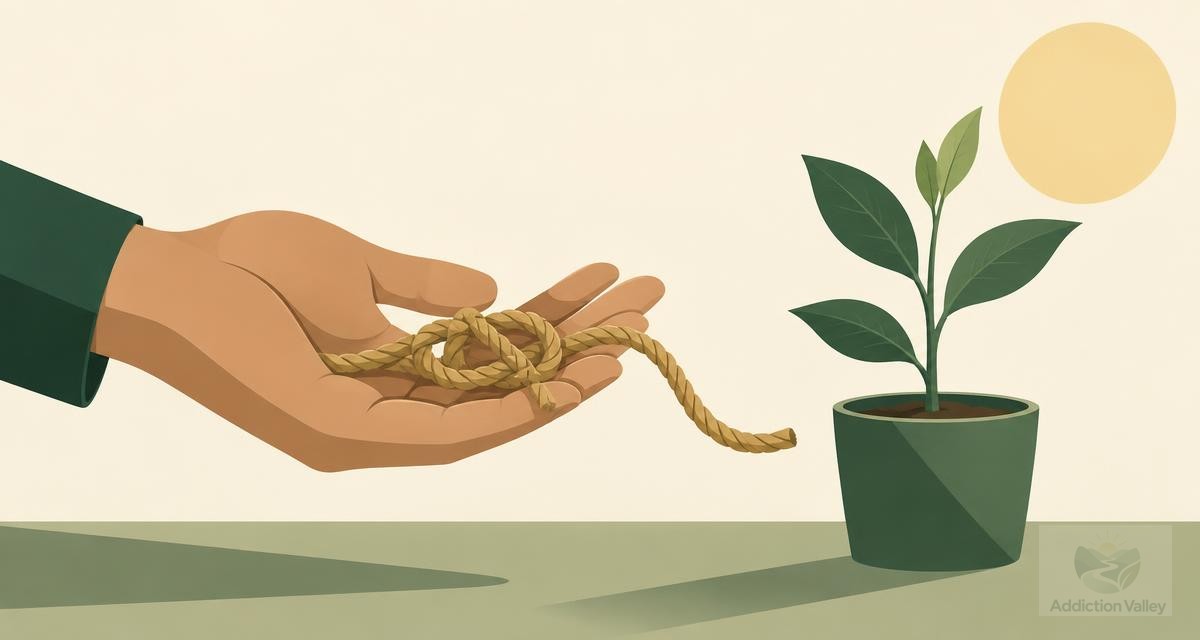
If you love someone who drinks or uses drugs, you have probably done things you are not proud of in the name of helping. Covering a missed shift. Paying a bill you did not owe. Making an excuse to their boss, their partner, or their kids. Most of it came from a simple place: you did not want to watch them crash.
Then someone said the word enabling, and everything you had been doing suddenly looked suspect. That word lands hard because it is usually delivered as an accusation rather than an explanation. The truth is gentler and more useful: enabling is what love and fear look like when they have no better tools. The problem is not your care. It is that some forms of care quietly remove every reason for the drinking or using to change.
This article explains what enabling actually is and is not, why it happens, how to tell the difference between helping and rescuing, and what evidence-based alternatives look like in daily life. It also covers how to set boundaries you can keep, and how to find support for yourself, because you cannot pour from an empty cup into a leaking one.
What enabling actually means
Enabling describes any action that shields someone from the natural consequences of their substance use, which lowers their motivation to change. It is not a diagnosis and it is not a character flaw. It is a pattern, and patterns can be adjusted.
The concept comes from the family treatment field, and it is often misunderstood as "do nothing." That is wrong. The goal of naming enabling is not to withdraw love or wait for someone to hit bottom before intervening. Research summarized by the American Psychological Association shows that families who learn structured skills get more loved ones into treatment than families who simply detach. The aim is to help in ways that keep consequences real and keep the relationship open.
A useful test: helping supports the person's recovery, while enabling supports their use, directly or indirectly. Driving someone to a doctor's appointment is helping. Calling their office to say they have the flu when they are hungover is enabling. The first connects them to the life they want. The second protects the life they say they want to leave.
Why enabling happens, even to careful people
Enabling rarely starts as a decision. It starts as a response to pain, and it hardens into a habit one crisis at a time.
- <strong>Fear of consequences.</strong> Sometimes the fear is accurate. A loved one who loses a license or a job may spiral further, and you cannot know in advance.
- <strong>Guilt.</strong> Many family members feel partly responsible for the drinking or using, and each rescue quietly pays off that debt.
- <strong>Exhaustion.</strong> Fixing today's problem is faster than holding a boundary through another two-hour argument.
- <strong>Hope for control.</strong> If you can just manage this week, maybe next week will be different.
- <strong>Shame.</strong> Keeping everything looking normal to the outside world feels safer than being seen as a family in trouble.
Naming your own reason matters, because each reason points to a different unmet need. Fear points to safety planning. Guilt points to your own counseling. Exhaustion points to respite and peer support. None of them points to another rescue.
Signs you might be enabling
One rescued crisis is not a pattern. If several of the following feel familiar, the pattern probably already exists.
- You lie, smooth over, or make excuses for their behavior more than they do.
- You give money, pay their bills, or cover debts that relate to using.
- You have called their employer, school, or partner to explain an absence caused by use.
- You finish their tasks or responsibilities so nobody notices the state they are in.
- You soften or skip consequences, then feel resentful for days afterward.
- You hide your own feelings, needs, and plans so their use does not get disrupted.
- You have threatened a consequence so many times without following through that it has become noise.
- You have stopped inviting friends over or going out, to hide what is happening at home.
Notice the last two especially. Enabling does not only shield the person using. It isolates everyone else, and isolation is exactly what keeps families stuck. If you are unsure whether the pattern has reached addiction, our overview of the signs of addiction covers what to look for.
Helping versus enabling in everyday situations
Because the line is situational, it helps to see the same situations handled both ways. The differences are rarely about whether you act. They are about what your action makes easier.
- <strong>They are hungover and late for work.</strong> Enabling: call in sick for them. Helping: let them make the call, or not, and let the conversation with their boss be theirs.
- <strong>They owe money they spent on substances.</strong> Enabling: quietly pay it. Helping: offer to sit with them while they make a repayment plan they fund themselves.
- <strong>They are ready to talk about treatment.</strong> Enabling: does not really apply here. Helping: find options with them today, before the window closes. Our guide on <a href="/guides/how-to-help-someone-with-addiction">how to help someone with addiction</a> walks through this conversation.
- <strong>They are drunk or high at a family event.</strong> Enabling: pretend nothing is happening so the event goes smoothly. Helping: leave early together, calmly, and talk about it tomorrow.
- <strong>They ask to borrow money.</strong> Enabling: hand it over with a warning. Helping: say no to cash, and offer something concrete, like a ride to a clinic or a meal together.
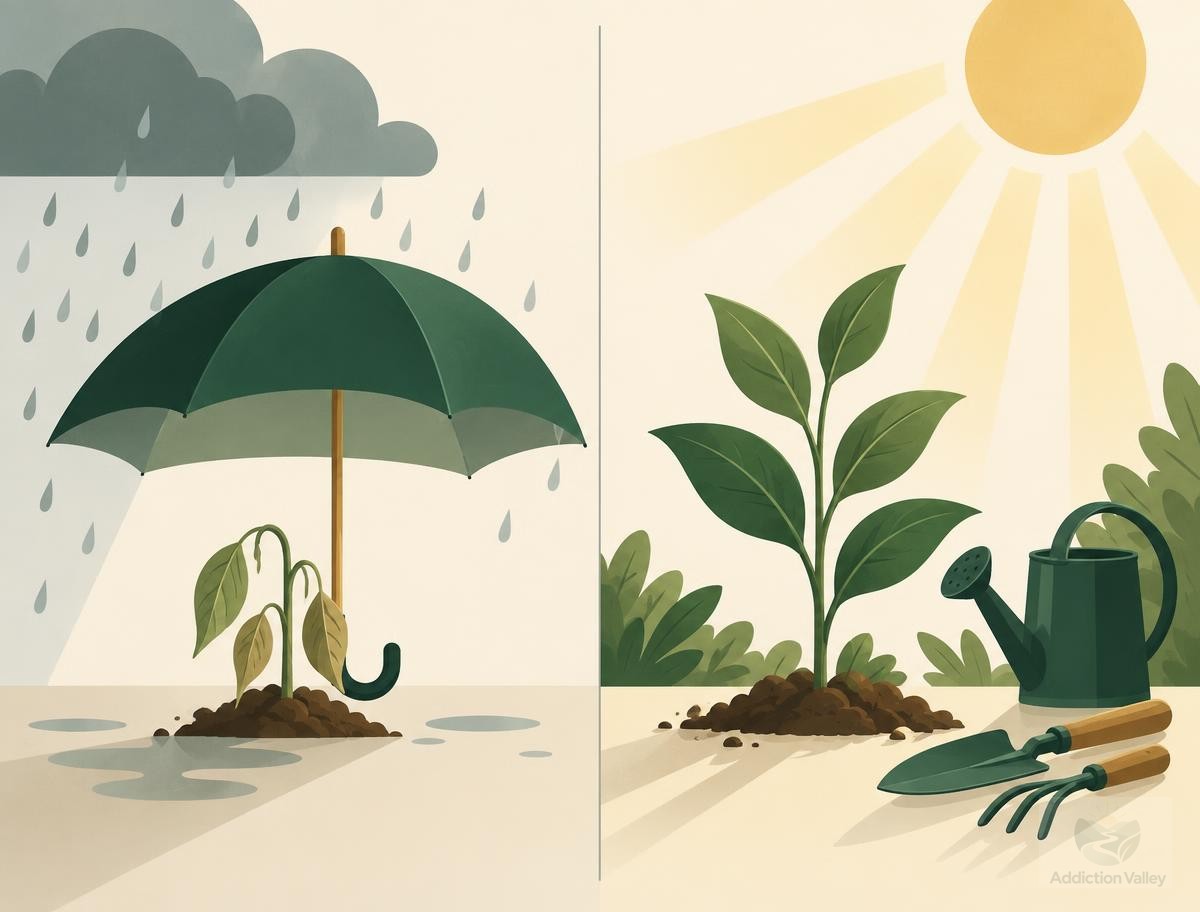
One warning applies across all of these. Never allow a consequence that puts anyone in danger. Withholding help is never the right response to an overdose, a seizure, or a suicidal statement. In a medical emergency, call 911 first and sort out the rest later.
What to do instead of rescuing
Stopping enabling is not the same as stopping support. It means moving your energy from managing consequences to changing the conditions around the use.
Let natural consequences arrive
When you stop buffering, consequences show up on their own: the late shift, the awkward conversation, the empty wallet. Uncomfortable as this is, those moments are often where motivation comes from. You do not have to add punishment. You just have to stop standing between your loved one and reality.
Reward what moves toward health
Families tend to pay heavy attention to the drinking and the using, and almost none to the sober hours in between. Noticing sober days, honest conversations, or an appointment kept does more to encourage change than any lecture. That imbalance is a core skill in the approaches described below.
Say what you will do, not just what they should
- I will not drive you anywhere after you have been drinking.
- I will not lend money, but I will always go with you to a meeting.
- I will answer the phone at 2 a.m. if you want a ride home, so you never drive impaired.
Notice that one of these boundaries is a safety net. Harm reduction and boundaries are not opposites. Keeping a 2 a.m. ride offer open protects against the worst outcome while still leaving everything else unbuffered.
Setting boundaries you can actually keep
A boundary is a statement about your own behavior, not a rule imposed on theirs. I will not is a boundary. You will stop is an ultimatum, and ultimatums fail as soon as they are tested. To set ones that hold:
- Write down the specific behaviors you will no longer absorb, such as lending money or canceling plans to cover for them.
- Phrase each one as a statement about you, starting with I will or I will not.
- Keep the list short. Two or three boundaries you keep beat ten you abandon by Thursday.
- Tell your loved one calmly, once, at a sober moment, without a long speech.
- Expect the boundary to be tested early, and plan exactly what you will do when it is.
- Follow through every time, because a boundary enforced nine times out of ten is not a boundary, it is a negotiation.
The hardest part is usually step five. The first test can feel cruel, especially if it involves something like being locked out or losing a phone. Remind yourself what the pattern costs over a year, not what one night costs. For more on the dynamics at play, our article on addiction and relationships covers trust, conflict, and repair in depth.
CRAFT: an evidence-based alternative to both rescuing and detaching
For years, families were handed a false choice: rescue constantly, or detach completely and wait for rock bottom. Community Reinforcement and Family Training, usually shortened to CRAFT, was developed to reject that choice entirely. It teaches concerned family members concrete skills for changing how they interact with a loved one, so that using becomes less rewarding and sober behavior becomes more rewarding.
The results are striking. In the controlled studies summarized by the APA, CRAFT got roughly 64 percent of initially treatment-refusing loved ones into treatment, compared with about 23 percent for a confrontational family intervention and 13 percent for traditional Al-Anon facilitation. Partnership to End Addiction teaches the same skills to parents and spouses.
- <strong>Positive communication:</strong> replacing lectures and ultimatums with brief, specific, non-judgmental statements that keep the door open.
- <strong>Positive reinforcement:</strong> genuinely noticing and appreciating sober, healthy behavior so it happens more often.
- <strong>Withdrawing reinforcement from use:</strong> not arguing, not rescuing, not providing money or cover when the person is using.
- <strong>Allowing natural consequences:</strong> letting outcomes land, except where safety is at risk.
- <strong>Being ready for the moment:</strong> knowing exactly which treatment options exist, so when your loved one shows willingness, you can act within hours rather than weeks.
- <strong>Taking care of yourself:</strong> treating your own life, health, and support as part of the intervention, not as an afterthought.
CRAFT is often available as a 12-week course, through a counselor trained in it, or in parent and spouse groups. If formal CRAFT is hard to find locally, the skills above are the curriculum in miniature, and the Partnership's CRAFT resources are free to read.
Support for you, not just for them
Families in this position tend to put their own needs last for years. That shows up eventually, as anxiety, insomnia, health problems, or a slow loss of who you were before all of this. Getting support for yourself is not a backup plan. It is part of the treatment.
- <strong>Al-Anon and Nar-Anon:</strong> free peer groups for family members of people with alcohol or drug problems, in person and online. Start at <a href="https://al-anon.org/" target="_blank" rel="noopener noreferrer">al-anon.org</a>.
- <strong>SMART Recovery Family and Friends:</strong> a secular, skills-based alternative built around CRAFT ideas.
- <strong>Individual counseling:</strong> a place to work through guilt, resentment, and boundary-setting with someone on your side.
- <strong>Your own doctor:</strong> chronic stress is a medical issue, and it deserves the same attention you give your loved one's.
When to get help today
Boundaries and patience have limits, and some situations should never be waited out. Reach out now if any of these are true.
- Your loved one has talked about suicide, self-harm, or not wanting to be here.
- There has been an overdose, a seizure, or a drinking-and-driving incident, or you believe one is coming.
- Children in the home are witnessing escalating use or conflict.
- You have thoughts of hurting yourself or someone else.
- The situation involves violence or threats, from either direction.
Frequently asked questions
What is the difference between enabling and helping?
Helping supports a person's recovery, such as driving them to an appointment or sitting with them while they call a treatment center. Enabling protects them from the consequences of use, such as paying debts, calling in sick for them, or keeping their using secret. The test is whether your action makes change more likely or less.
Is enabling the same as codependency?
They overlap but are not identical. Enabling refers to specific behaviors that shield someone from consequences. Codependency is a broader pattern where your own sense of worth and wellbeing becomes organized around managing another person's problem. A person can enable without being codependent, though the two often travel together.
Will stopping enabling make my loved one hit rock bottom?
Not necessarily, and rock bottom is not required for recovery. Research on CRAFT shows that families can actively encourage treatment without confrontation and without detachment, and that this approach gets more people into treatment than waiting or confronting. Allowing consequences is different from abandoning someone.
Should I stop giving my loved one money completely?
Most family guidance says to stop giving cash, because money given for rent or food frees up money for substances. You can still offer concrete support: a meal, a ride, a phone call made together, or help finding treatment. If you are worried about a basic need like utilities, pay the provider directly rather than handing over cash.
What is CRAFT and does it really work?
CRAFT stands for Community Reinforcement and Family Training. It teaches family members communication and reinforcement skills to encourage a loved one toward treatment. In controlled studies summarized by the American Psychological Association, CRAFT engaged around 64 percent of treatment-refusing loved ones into treatment, compared with much lower rates for confrontational interventions or traditional facilitation.
Where can family members of addicted people find support?
Al-Anon and Nar-Anon offer free peer support groups for families, and SMART Recovery Family and Friends offers a skills-based secular option. Individual counseling also helps. The SAMHSA National Helpline at 1-800-662-4357 can point you to local family resources.
Support that actually helps
You can love someone without carrying their consequences. Find free, confidential support for your family and a clear next step for the person you are worried about.
Start with worried about someone elseSources
- American Psychological Association, Community Reinforcement and Family Training (CRAFT)
- Partnership to End Addiction, The CRAFT Approach
- Al-Anon Family Groups
- National Domestic Violence Hotline
- SAMHSA National Helpline
- 988 Suicide and Crisis Lifeline
- FindTreatment.gov, federal treatment locator
This article is for information only and does not replace advice from a qualified clinician who knows your history. In the United States, call or text 988 for the Suicide and Crisis Lifeline.