
Ambien Addiction: Signs, Risks, and How to Stop Safely
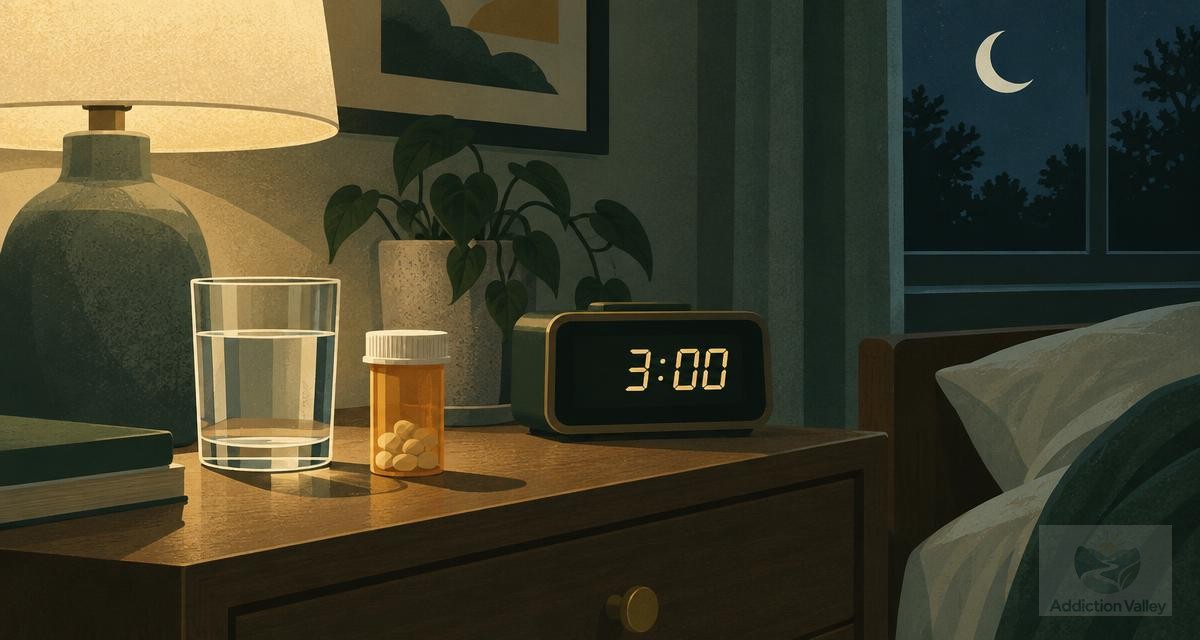
Ambien is one of the most prescribed sleep medications in the United States, and most people start it for an understandable reason: a stretch of insomnia that was wrecking work, mood, or health. The problem is that the line between taking it as prescribed and needing it to function can blur within weeks, and many people do not notice the crossing.
Zolpidem, the generic name for Ambien, was marketed as a safer alternative to benzodiazepines. It is safer in some respects, but it acts on the same brain receptors, and dependence is a well-documented outcome, especially with nightly use beyond a few weeks or at doses above the prescribed amount.
This article covers how Ambien dependence develops, the signs that use has become a problem, why quitting cold turkey usually backfires, what a safe taper looks like, and what treatment involves when stopping on your own has not worked.
How Ambien dependence develops
Ambien belongs to a class called Z-drugs, sedative-hypnotics designed for short-term insomnia. The FDA prescribing information for zolpidem recommends the lowest effective dose for the shortest possible time, and it warns explicitly about abuse, dependence, and tolerance. Those warnings exist because the brain adapts to the drug quickly.
The adaptation works like this. Ambien boosts the effect of GABA, the brain's main calming chemical. With repeated nightly use, the brain reduces its own GABA activity to compensate. Sleep then depends on the pill being present. Skip a dose, and the brain's reduced natural calming shows up as rebound insomnia that is often worse than the original problem, which makes the next pill feel necessary. That loop is dependence.
Tolerance often arrives alongside it. The dose that worked in month one stops working in month four, and people begin taking a pill and a half, then two, or redosing when they wake at three in the morning. Each step up deepens the dependence and raises the risks.
Factors that raise the risk
- Nightly use beyond two to four weeks, the window most prescribing guidance recommends.
- Doses above the prescribed amount, or taking a second dose during the night.
- A personal or family history of substance use problems.
- Combining Ambien with alcohol, opioids, or anti-anxiety medications.
- Using it for stress or emotional escape rather than only for sleep.
Signs that use has become a problem
Because Ambien comes from a pharmacy with a prescription label, problematic use rarely looks like what people picture as addiction. The signs are quieter, and they show up in behavior around the medication itself.
- Running out of the prescription early, month after month.
- Thinking about the medication during the day, or feeling anxious when the supply gets low.
- Taking it earlier in the evening, or on nights when sleep was never the issue.
- Visiting more than one doctor or pharmacy to keep supplies steady.
- Trying to cut back and finding you cannot, or that a single sleepless night sends you back to the full dose.
- Continuing to use despite memory gaps, morning grogginess, or a partner's concerns.
The behaviors unique to Ambien
Zolpidem has a well-documented association with complex sleep behaviors: sleepwalking, sleep eating, and in rare cases sleep driving, with no memory of the episode afterward. The FDA lowered recommended zolpidem doses partly because of next-morning impairment, especially in women, whose bodies clear the drug more slowly. Anyone experiencing these episodes should talk to their prescriber promptly, because they signal the dose is too high for that person.
The risks beyond dependence
On its own, Ambien's most common harms are next-day drowsiness, impaired driving, falls in older adults, and the complex sleep behaviors described above. The more serious danger arrives when it is combined with other substances that slow the nervous system.
Mixing zolpidem with alcohol, opioids, or benzodiazepines stacks sedative effects, and the combination can slow breathing to dangerous levels. The CDC overdose prevention guidance is clear that most overdose deaths involve more than one substance, and sedatives taken together are a recurring pattern. Someone taking Ambien nightly who also drinks in the evening is carrying more risk than either habit alone.
Longer-term concerns
- Worsening sleep architecture over time, where the drug produces unconsciousness but not restorative sleep.
- Daytime anxiety and low mood that improve when the medication is stopped.
- Memory and concentration problems, particularly at higher doses.
- Increased fall and fracture risk in adults over 65.
Why stopping suddenly backfires

The most common way people try to quit Ambien is also the least successful: they decide they are done, skip the pill, and lie awake until four in the morning. After one or two nights of that, the bottle comes back out. This is not a willpower failure. It is rebound insomnia, the predictable result of a brain that has downregulated its own calming system.
Abruptly stopping after months of nightly use can also bring anxiety, tremor, sweating, nausea, and in rare cases after very high doses, seizures. The risk profile is milder than benzodiazepine withdrawal but follows the same logic: the brain needs time to rebuild what the medication was supplying.
What a taper looks like
- Tell your prescriber you want to stop. This is a routine conversation, not an admission of failure, and it gives you a supervised plan.
- Reduce the dose gradually, commonly by a small step every one to two weeks, slower if you have used it for a long time.
- Expect a rough night or two after each step down. Knowing it is temporary makes it easier to hold.
- Add non-drug sleep support at the same time, because the taper works far better when something replaces the pill.
- Pause the taper rather than reversing it if a step feels unmanageable, then continue when stable.
The replacement piece matters most. Cognitive behavioral therapy for insomnia, known as CBT-I, has the strongest evidence base of any insomnia treatment, and federal health guidance on insomnia treatment lists it as the first-line approach. It teaches the brain to associate bed with sleep again, and its results outlast any medication.
When stopping on your own has not worked
Some people taper off Ambien with their prescriber and never look back. Others find that the medication was covering something larger, like anxiety, trauma, or a pattern of using substances to manage feelings, and stopping the pill exposes it. Both outcomes are common, and the second one is treatable.
Treatment for sedative dependence ranges from structured outpatient support, where a clinician manages the taper while a therapist works on sleep and the underlying drivers, to more intensive programs when Ambien is part of a wider pattern of substance use. The right level depends on how much you are taking, what else is in the picture, and what has already been tried.
Questions a clinician will ask
- How long you have been taking it, at what dose, and whether you ever take extra.
- What happens on nights without it.
- Whether alcohol, cannabis, or other medications are part of your sleep routine.
- What the original insomnia looked like, and what was happening in your life when it started.
If you do not have a prescriber you can talk to, findtreatment.gov lists licensed treatment services and lets you filter by location and payment type. Our own resources page gathers the national helplines and locators in one place.
If you are worried about someone else
Partners and family members usually notice Ambien problems before the person taking it does, because the clearest signs happen at night: the empty bottle two weeks early, the 2 AM kitchen visits nobody remembers, the grogginess that never fully lifts.
The conversation tends to go best when it is specific and calm. Naming what you have seen, rather than labeling the person, keeps defensiveness down: the early refills, the night episodes, the mornings. Offering to help find a prescriber or sit in on the appointment does more than asking them to promise to stop.
If the situation includes other substances, or if attempts to stop have led to frightening symptoms, treat it as a medical matter rather than a household disagreement. The SAMHSA National Helpline at 1-800-662-4357 is free, confidential, and available around the clock for families as well as for the person using.
When to get help urgently
Most Ambien problems are best handled in a planned, unhurried way with a prescriber. A few situations should not wait.
- Seizures, hallucinations, or severe confusion after stopping or cutting down.
- Sleep driving, or any complex sleep behavior that could hurt someone.
- Combining Ambien with opioids or heavy drinking, especially if the person is hard to wake.
- Thoughts of self-harm, or a sense that life is not worth living.
Frequently asked questions
Is Ambien addictive?
Yes. Zolpidem was designed to be safer than older sleep medications, but dependence and tolerance are well documented, especially with nightly use beyond a few weeks or at doses above the prescribed amount. The FDA prescribing information carries explicit warnings about abuse and dependence.
How long does it take to get addicted to Ambien?
There is no fixed timeline, but physical dependence can begin within a few weeks of nightly use. Risk rises with higher doses, redosing during the night, a history of substance use problems, and combining it with alcohol or other sedatives.
Can you just stop taking Ambien?
Stopping suddenly after regular use usually triggers rebound insomnia that is worse than the original problem, and can bring anxiety, tremor, and nausea. A gradual taper supervised by a prescriber, combined with non-drug sleep treatment like CBT-I, works far better and is safer.
What is the safest way to come off Ambien?
A slow dose reduction planned with your prescriber, typically stepping down every one to two weeks, while adding cognitive behavioral therapy for insomnia to rebuild natural sleep. Pausing the taper when a step feels unmanageable is normal and expected.
Is Ambien dangerous with alcohol?
Yes. Both substances slow the nervous system, and together their effects stack, which can slow breathing to dangerous levels and sharply raises the risk of blackouts, accidents, and overdose. The combination should be avoided entirely.
Ready to sleep without the pill?
Stopping sleep medication is a plan, not a test of willpower. Find a prescriber who can map the taper, and use the directory to locate support near you.
Find support near youSources
- DailyMed, Zolpidem Tartrate prescribing information
- FDA, Lower doses required for certain sleep drugs containing zolpidem
- NHLBI, Insomnia treatment options
- CDC, Stop Overdose
- SAMHSA, National Helpline
- FindTreatment.gov, federal treatment locator
This article is for information only and does not replace advice from a qualified clinician who knows your history. In the United States, call or text 988 for the Suicide and Crisis Lifeline.