
Home / Blog / Zero-Alcohol Drinks in Recovery: Helpful Swap or Hidden Trigger?
Zero-Alcohol Drinks in Recovery: Helpful Swap or Hidden Trigger?
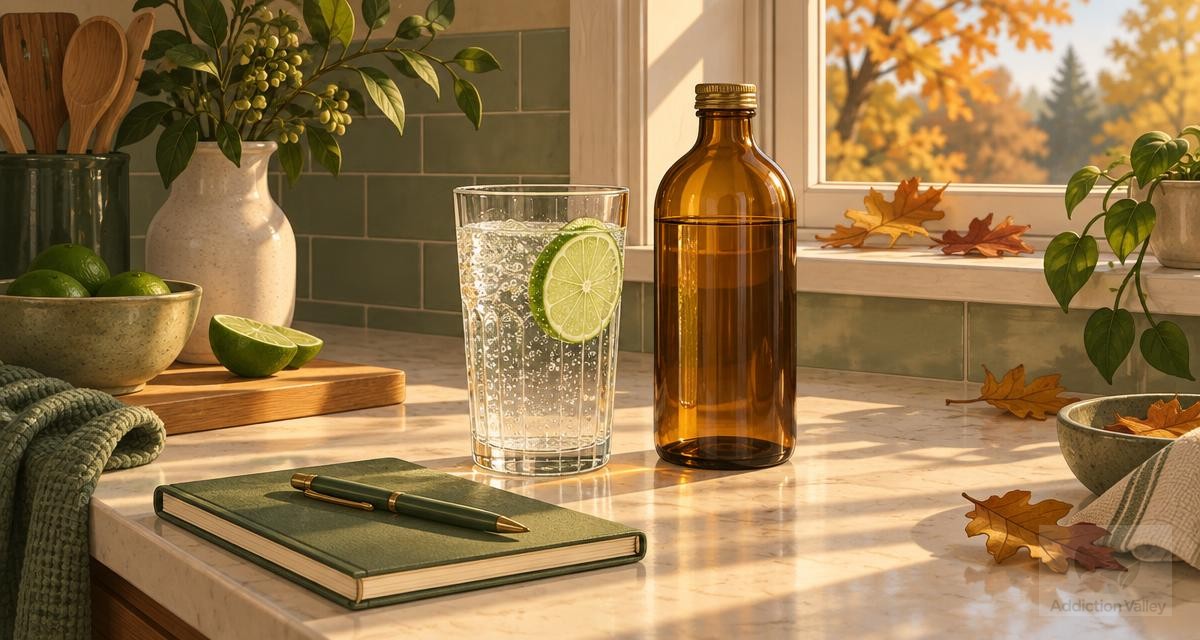
Walk into almost any grocery or liquor store in the United States and you will find a growing shelf of non-alcoholic beers, wines, and "spirits." They look like the real thing, often taste close to it, and are turning up everywhere from fall tailgates and Halloween parties to the office holiday get-together.
For lots of people, that shelf feels like good news. For someone in recovery from an alcohol problem, the picture is more complicated. The same features that make these drinks appealing (the familiar can, the hiss when it opens, the taste) can also bring old patterns back to the surface.
With the holiday season ahead, this is a question many people in recovery end up facing at a party, a family dinner, or in front of the fridge. This article does not hand out a yes or no. Whether zero-alcohol drinks fit into your recovery is a personal question, and ideally one you work through with someone who knows your history. What we can offer is a clear look at what these products are, why some people reach for them, why they can unsettle others, and the questions worth asking before you pour one.
What "non-alcoholic" actually means on a label
"Zero-alcohol" is mostly a marketing phrase. The labels that carry legal meaning are more specific. For beer-style malt beverages, the federal Alcohol and Tobacco Tax and Trade Bureau (TTB) says the term "non-alcoholic" may only be used if the label also states that the drink contains less than 0.5 percent alcohol by volume. The term "alcohol free" may only be used on malt beverages that contain no alcohol.
Two things follow from that:
- "Non-alcoholic" does not always mean zero. A drink labeled non-alcoholic can still contain a small amount of alcohol. Reading the label is worth the extra few seconds, and if you are unsure what a product contains, ask your doctor or pharmacist.
- These drinks are designed to resemble alcohol. That is the point of them, and it is exactly why they can feel helpful to one person and risky to another.
Why some people reach for them
People who choose non-alcoholic versions often describe a few practical reasons. None of these is a promise that they will work for you, but they help explain the appeal.
Fewer awkward questions
Holding a drink that looks like everyone else's can take the spotlight off you at a party. Some people simply do not want to explain their choices every time someone offers a round.
Keeping a ritual without the alcohol
For many, the habit is not only about the alcohol. It is the end-of-day pause, the clink of glasses, the "game is on" moment. Some people want to keep the ritual while changing what is in the glass.
A bridge while new habits form
Some people use them for a while, then drift toward sparkling water, tea, or nothing in particular once the new routine feels steady.
Why they can be risky in recovery
The National Institute on Alcohol Abuse and Alcoholism (NIAAA) explains that an urge to drink can be set off by external triggers: people, places, things, or times of day that offer drinking opportunities or remind you of drinking. A drink that looks, smells, and tastes like beer or wine is, almost by design, a reminder of drinking. For some people in recovery, that reminder can act like any other trigger.
That is not a moral failing or a lack of willpower. It is how learned habits work. The brain links certain sights, sounds, smells, and places with drinking, and a close imitation can switch those links back on.
Some of the ways that can show up:
- Cravings that seem to come from nowhere after a non-alcoholic beer, especially in a familiar setting like a sports bar or the couch on a Friday night.
- "Permission creep," where the thought shifts from "this is basically the same" to "so one real one won't matter."
- Being back in old places (the liquor aisle, the bar) more often than you otherwise would be.
- Drinking more of it than you planned, with the same sense of reaching for the fridge on autopilot.
None of this happens to everyone. But it is worth going in with your eyes open. NIAAA also notes that urges to drink are short-lived, predictable, and controllable, and its free Rethinking Drinking tools walk through practical ways to recognize, avoid, and cope with them.
Questions to ask yourself before you pour one
There is no checklist that gives a guaranteed answer, but these questions can help you notice what is going on:
- What am I actually after? Thirst, something to hold, the taste, the ritual, fitting in, or something else?
- How does my body react? Notice any pull, restlessness, or "I want more" feeling in the first few sips.
- Where am I, and who am I with? A non-alcoholic beer at a family lunch might feel very different from one alone at 10 p.m.
- Is this replacing alcohol, or keeping a door open? Only you can answer that honestly, and the answer may change over time.
- Who could I talk this through with? A doctor, counselor, or peer support group can help you think it over without judgment.
If your answers worry you, that is useful information, not a failure. Plenty of people decide these drinks are not for them, at least for now, and plenty change their minds later. Both are legitimate choices.
Other options for the glass in your hand
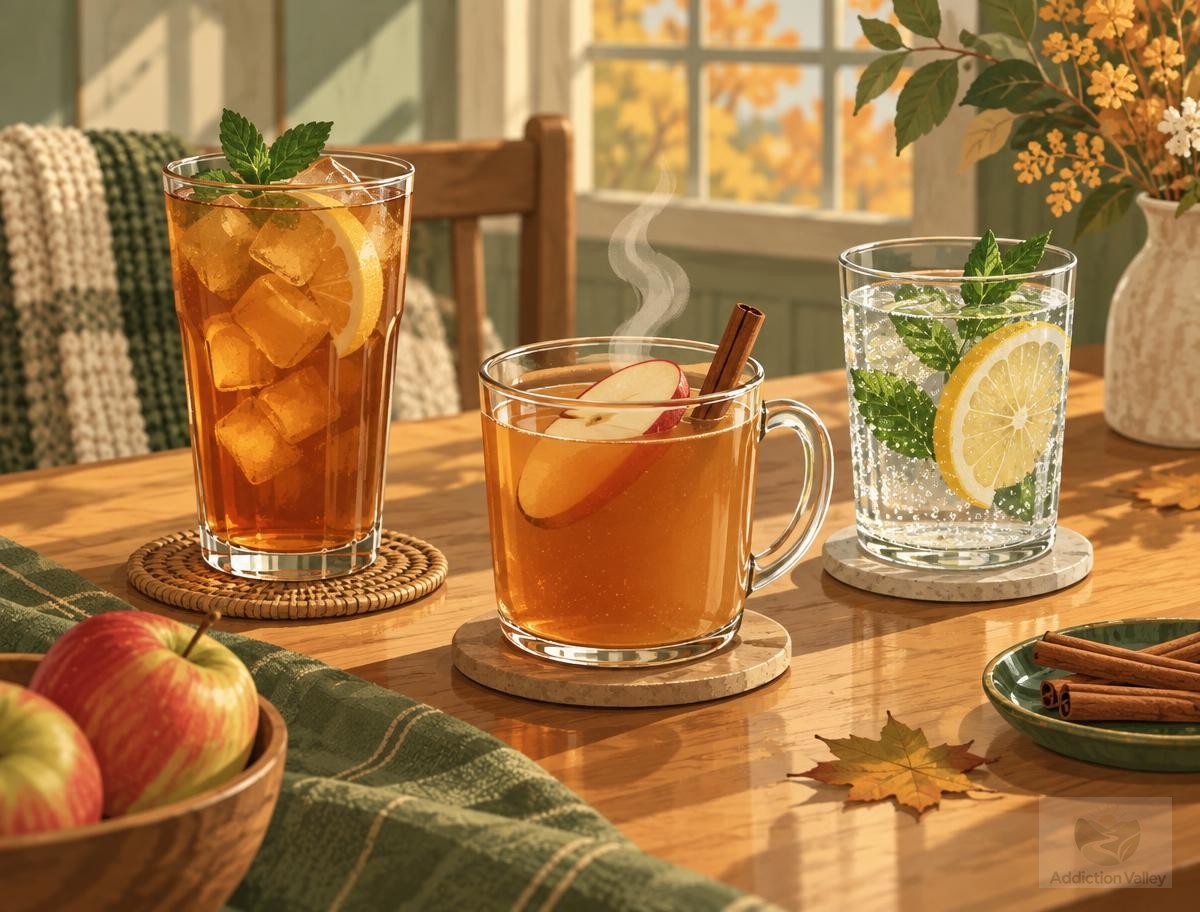
If you want to keep the ritual but skip the imitation, there are plenty of drinks that do not look or taste like alcohol:
- Sparkling or club soda with fresh lime, lemon, cucumber, or mint
- Iced tea, cold brew, or a good pot of hot tea
- Hot apple cider or ginger ale when the weather turns cool
- A "signature" drink that becomes yours, in a glass you only use for it
One label note: kombucha is fermented, and the TTB explains that fermentation may produce a kombucha with 0.5 percent or more alcohol by volume. If you are avoiding alcohol completely, check the label.
The aim is not to find a perfect substitute. It is to find something that supports the life you are building rather than pulling you back toward the old one. Our guide on early recovery routines has more ideas for rebuilding the evening wind-down.
Talking about it with others
Friends and family often mean well when they hand you a non-alcoholic beer. If it is not right for you, NIAAA suggests having a polite, convincing "No, thanks" ready. A short, friendly line is enough: "Thanks, I'll grab a water," or "I'm keeping it simple tonight." You do not owe anyone a full explanation.
If you are the one supporting someone in recovery, it can help to ask rather than assume. A quiet "Would you like me to pick up some non-alcoholic options, or would you rather we skip them?" respects their choice and keeps the conversation open, especially when you are planning a holiday menu.
When to get extra support
Please talk to a doctor or a qualified addiction professional if:
- You notice stronger cravings or find yourself drinking alcohol again
- You are unsure whether you are ready for holiday gatherings or social situations involving drinks
- You have been drinking heavily and are thinking about stopping. NIAAA cautions that when someone who has been drinking heavily for a prolonged period suddenly stops, withdrawal can be painful or even potentially life-threatening, so please seek medical help to plan a safe approach first.
A slip or a hard week does not erase the progress you have made. If it happens, it can be a signal to reach out, adjust the plan, and keep going. Our relapse prevention guide covers that in more depth.
Frequently asked questions
Are non-alcoholic drinks completely alcohol-free?
Not always. Under federal labeling rules for malt beverages, "non-alcoholic" means the drink contains less than 0.5 percent alcohol by volume, while "alcohol free" means it contains none. Check the label, and if you are unsure, ask your doctor or pharmacist.
Can non-alcoholic beer trigger a relapse?
It can for some people. NIAAA describes external triggers as people, places, things, or times that remind you of drinking, and a drink that looks and tastes like beer can be one of those reminders. Not everyone reacts the same way. If you are unsure, talk it through with a health professional who knows your situation.
Is it "cheating" to drink non-alcoholic drinks in recovery?
Recovery is not a test with a single set of rules. What matters is whether a choice supports your well-being and goals. Some recovery communities discourage these drinks and others leave it to the individual, so it is worth having an honest conversation with your support people.
What can I drink at a holiday party instead?
Club soda with fresh citrus, iced tea, hot apple cider, ginger ale, or a mocktail that does not imitate a specific alcoholic drink are popular choices. Holding a glass of something you enjoy often helps more than people expect.
Keep exploring
Plain-language guides on alcohol, recovery, and support for families are here whenever you are ready. Visit Addiction Valley to find your next step, at your own pace.
Visit Addiction ValleySources
- Alcohol and Tobacco Tax and Trade Bureau (TTB), Malt Beverage Labeling: Alcohol Content
- Alcohol and Tobacco Tax and Trade Bureau (TTB), Kombucha
- NIAAA Rethinking Drinking, Handling Urges to Drink
- NIAAA Rethinking Drinking, Tips to Try
- NIAAA Rethinking Drinking, Should You Cut Down or Quit?
- SAMHSA National Helpline
- 988 Suicide and Crisis Lifeline
This article is for information only and does not replace advice from a qualified clinician who knows your history. In the United States, call or text 988 for the Suicide and Crisis Lifeline.